Event
Black Wall Street
Speakers
Alicia OdewaleTopics
CultureScience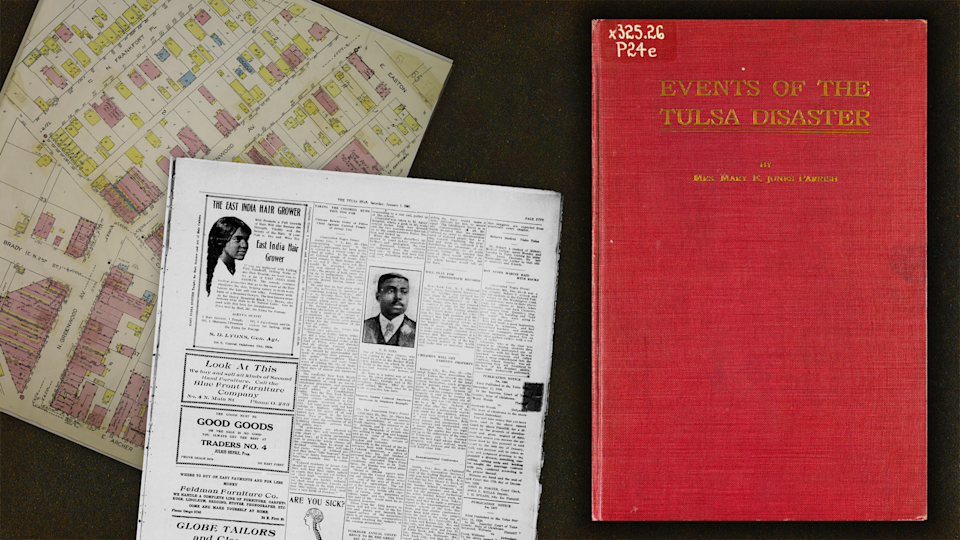
Stories of resilience have emerged in the century since the attack on Black Wall Street in the vibrant Greenwood district of Tulsa, Oklahoma. We start with archival recordings to hear directly from survivors of one of the worst episodes of racial violence committed against Black Americans in the country’s history. Then archaeologist and National Geographic Explorer Alicia Odewale, a Tulsa native, reveals how archaeology can be a tool for reclaiming hidden narratives and pursuing restorative justice
Interested in booking a speaker for an event?
Contact Us
Alicia Odewale
Alicia Odewale (Ware) was born and raised in Tulsa, Oklahoma. She is the great grandniece of Robert Ware, who attended Dunbar Grade School in Greenwood and survived the Tulsa Race Massacre in 1921. She is also a graduate of Booker T. Washington High School, a historically Black high school created during Oklahoma’s Jim Crow era and one of the few structures that survived the attack on Greenwood in 1921.
She earned her college degrees at Westminster College and The University of Tulsa (TU), and in 2016 made history as the first person of African descent to receive a doctorate in anthropology at TU. She was also the first Black faculty member to join TU’s department of anthropology and today continues to work as an archaeologist and educator in Oklahoma, specializing in African Diaspora archaeology in the Caribbean and southeastern United States with a theoretical focus on community-centered, restorative justice, anti-racist and Black feminist archaeology.
Since 2014, Odewale has been researching archaeological sites related to Afro-Caribbean heritage on St. Croix, U.S. Virgin Islands, and since 2019 has been researching sites of Black heritage in her home state of Oklahoma. Her latest research project, “Mapping Historical Trauma in Tulsa from 1921-2021,” is co-created with other Tulsans and seeks to reanalyze historical evidence from the aftermath of the 1921 Tulsa Race Massacre, launch new community-based archaeological investigations in the Historic Greenwood District, and use radical mapping techniques to visualize the impact of the massacre through time on the landscape of Greenwood.
Odewale joined the National Geographic family in 2021 as a speaker with National Geographic Live through her show entitled “Greenwood: A Century of Resilience”. She also accepted the invitation to become a community leader through National Geographic’s 2892 Miles to Go: Geographic Walk for Justice Project. Both projects provide an opportunity for her to go beyond the classroom and share her research in new and innovative ways with the world.
Her research interests include the archaeology of enslavement and freedom in urban contexts, Caribbean archaeology, rural and urban comparative analyses, community-based archaeology, ceramic analysis, transferware studies, mapping historical trauma from the 1921 Tulsa Race Massacre, restorative justice and auto-archaeology, and investigations into different forms of anti-slavery resistance. She is also the co-creator of the Greenwood Archaeology Curriculum and the #TulsaSyllabus, an online resource guide that dives into the history and archaeology of Black enslavement, land ownership, anti-Black violence, and the rise of prosperous Black communities in Oklahoma.
Her research has received awards and support from the National Geographic Society, the American Anthropological Association, the National Science Foundation, the Society of Historical Archaeology, the Tulsa Race Massacre Centennial Commission, and the Digital Archaeological Archive of Comparative Slavery (DAACS).
Educational Materials
Coming to see this show with your students? Download a free educator guide and student handout to help learners think like an Explorer.
This tool is customized to help learners see the Explorer’s work through the lens of the Explorer Mindset Learning Framework.
Promotional Materials
Hosting this event? Enter the password sent to you by the National Geographic Live team to access your show toolkit.